
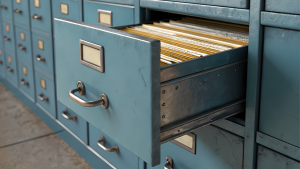
Imagine you’re a healthcare administrator with this problem – one that would make most compliance officers break out in a cold sweat. You need to access patient records from 2008 to respond to a legal request. Simple enough, right? Except that those are no longer accessible records – they lived in a practice management system that was retired five years ago. The vendor had been acquired twice since then. The server was gathering dust in a storage closet. Nobody on staff remembered how to log in.
This kind of information loss isn’t an isolated incident. It’s happening right now in organizations across every sector – government agencies, financial institutions, manufacturers, and universities. We’ve spent decades creating digital records, and we’re just now confronting an uncomfortable truth: Electronic file management systems don’t last as long as the records they’re supposed to protect.
Think about your own organization for a moment. How many different systems have you used to create and store records over the past ten years? That CRM you replaced three years ago – where did all those customer interaction records go? The project management platform everyone used before switching to the current one – are those files still accessible records? The email archive from the previous email system – is it searchable, or is it just technically available somewhere on a backup tape?
Record Retention vs. Accessible Records
The problem becomes compounded because record retention requirements don’t take your technology refresh cycles into account. When regulations require you to retain records for 7 years, 10 years, or permanently, they mean accessible records. A backup tape sitting in Iron Mountain isn’t accessible. A retired application that requires specialized knowledge to operate isn’t accessible. A file format that current software can’t open isn’t accessible.
We’ve watched organizations discover this gap in painful ways. A manufacturing company facing a product liability lawsuit couldn’t produce design documents from twelve years ago because they were created in a PLM system that no longer existed. A government agency spent six months and hundreds of thousands of dollars reconstructing property records from legacy systems to respond to public records requests. A financial services firm paid substantial penalties because it couldn’t demonstrate compliance with document retention guidelines for accounts opened in a previous generation of their core banking system.
The accessibility issue creates immediate operational problems. Employees can’t find the information they need because a former employee stored it in a retired system. They recreate work that already exists. They waste time hunting through disconnected archives, or worse, they give up and move forward without critical historical information. We’ve seen engineering teams redesign components previously engineered because the original specifications were trapped in an obsolete system.
But the compliance exposure is what keeps legal and compliance teams awake at night. Your data governance process might be excellent for current systems, but what about the records in systems you retired five years ago? Are they included in your retention schedules? Can you execute holds when litigation requires preserving records? Can you respond to data subject access requests under privacy regulations? If an auditor asks to see documentation from 2015, can you actually produce it?
so what do you need to do?
Here’s where it gets tricky: Many organizations think they’ve solved this problem through migration projects. When they implement a new system, they migrate the data from the old one. Sounds good in theory. In practice, it rarely works cleanly. Migrations lose metadata. They flatten complex relationships, strip out attachments, and convert rich documents into plain text. You end up with something that technically contains the record content but loses the context that makes it meaningful.
The alternative isn’t much better. Some organizations choose to keep legacy systems running indefinitely. Maintaining obsolete systems creates its own nightmare – servers, software licenses, and specialized knowledge for systems that serve no operational purpose other than occasional record retrieval. The costs accumulate. The security risks multiply as systems fall further out of patch support. The institutional knowledge walks out the door when the one person who knew how to operate the old system retires.
What’s needed is a fundamental shift in how we think about electronic file management. Instead of treating each system as a self-contained record repository, organizations need to extract records of permanent or long-term value into dedicated preservation systems before retiring operational platforms. This shift in thinking isn’t just about migration, it’s about active curation guided by document retention guidelines and business value.
Accessible Record Preservation
The preservation approach requires planning that most organizations don’t do. You need to identify which records have value beyond the operational life of the system that created them, extract not just content but context (metadata, relationships, workflow history, etc.), and use formats that will remain accessible regardless of future technology changes. And you need this as part of your standard data governance process, done at the time of creation through a tool like Preservica, not as a crisis response when you’re ready to sunset a system.
Organizations need to treat record preservation as seriously as record creation. They need to build preservation requirements into system procurement, plan exits before they plan implementations, and maintain comprehensive inventories of where records exist, including systems that no longer run but still contain records under legal hold.
The records you’re creating today will outlive the systems you’re making them in. The question isn’t whether your current platforms will eventually be retired – they will. The question is whether you’ll still be able to access the records they contain on that day.
[Created by a human with the assistance of Claude.AI]